Schedule Case Review
(617) 675-9288
Menu
Schedule Case Review
(617) 675-9288
Menu


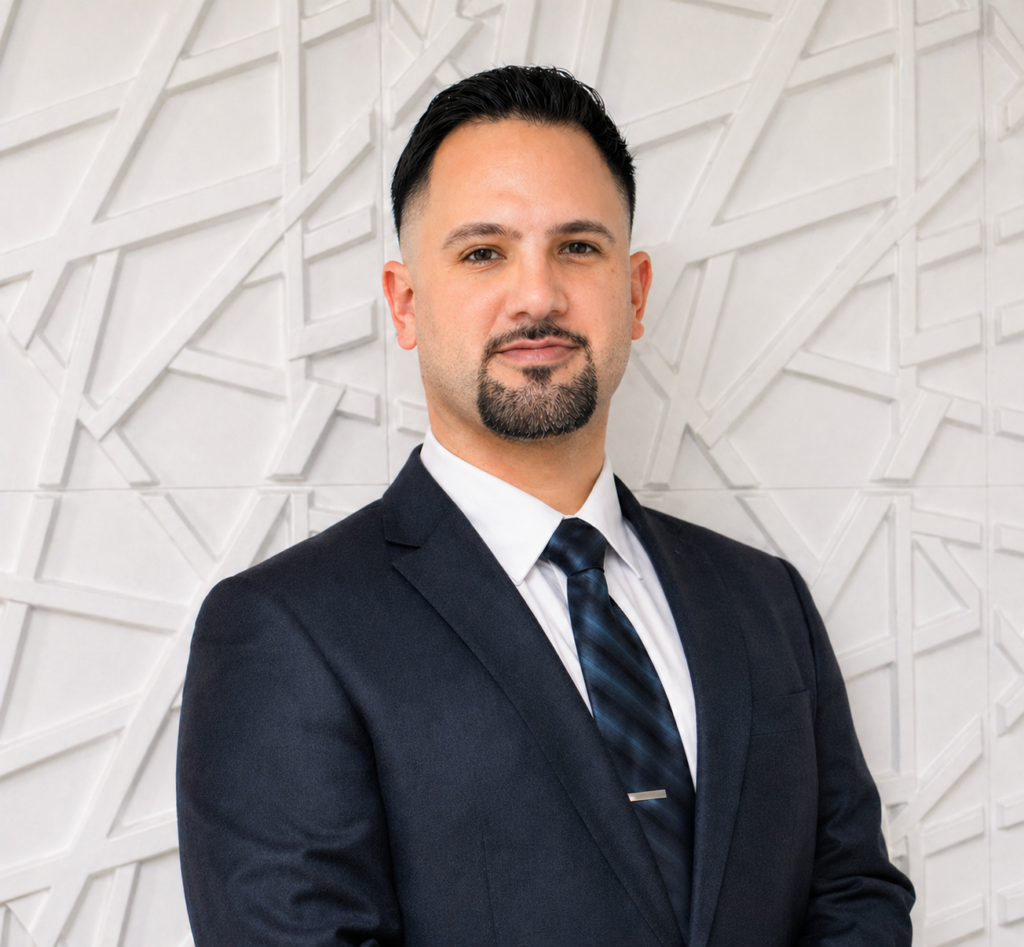
Written/Reviewed By:
Flávio DaCosta Esq.
Last Updated: Aug 20, 2026

Read Time: 17 mins
Are you looking for an asylum lawyer in New Bedford, MA?
At Flavio DaCosta Law, we provide asylum representation grounded in more than five years of work on behalf of clients in New Bedford.
If you cannot safely return to your home country, a New Bedford, MA asylum lawyer can tell you whether your circumstances fit the legal definition of persecution and what proof an officer or judge will expect to see. Asylum applications are generally due within one year of a person’s last arrival in the United States, and that deadline governs a great many cases. Our firm prepares affirmative applications for filing with the government and defensive applications for presentation in court. Schedule a consultation to review your claim and its timing.
New Bedford’s poverty rate is 20.6%, double the 10.2% rate for Bristol County as a whole, according to New Bedford QuickFacts. For applicants who cannot work until they qualify for employment authorization, the length of a case is not an abstract question.
Asylum is protection granted to a person who has suffered persecution, or who has a well-founded fear of it, on account of race, religion, nationality, political opinion, or membership in a particular social group. It is available regardless of how a person arrived. An asylum attorney evaluates whether the harm experienced or feared meets that standard, prepares the supporting record, and represents the applicant where the claim is decided. Our asylum lawyers in New Bedford, MA handle both routes to that decision.
Asylum claims reach a decision-maker by different paths, and each path has its own procedure and its own risks. These are the matters our New Bedford attorneys take on.
The strength of an asylum case rests on the record behind it. Testimony has to be consistent across every document the applicant has ever submitted, corroborating evidence has to be located and often translated, and country conditions reporting has to connect the applicant’s individual experience to a documented pattern. That work takes months, and it is the part of a claim most often left underdeveloped. Flavio DaCosta has concentrated on immigration law for more than five years and is admitted in Massachusetts, Rhode Island, and the federal district court for the First Circuit. Our office acts as an immigration lawyer in New Bedford, MA across the benefits practice, which matters when a client turns out to have a second route available.
The matters we have handled in this area include:
An asylum claim has a fixed structure. The applicant must show past persecution or a well-founded fear of future persecution, and must connect that harm to one of five protected grounds: race, religion, nationality, political opinion, or membership in a particular social group. Harm alone is not enough. A person who was attacked for reasons unconnected to any protected ground has suffered something real and may still not qualify.
The applicant must also show that the government of the home country was responsible for the persecution or was unwilling or unable to control those who were. Claims involving domestic violence, gang violence, or private actors often turn on this element rather than on whether the harm occurred.
Credibility carries enormous weight. A decision-maker who finds an applicant credible may grant the claim on testimony supported by modest corroboration, while inconsistencies between the written application and the oral testimony can defeat a claim that is otherwise strong. An applicant who marries a citizen while the claim is pending may also develop a route through a marriage green card, and the two filings have to be coordinated. USCIS publishes its own overview of asylum eligibility, and the affirmative and defensive processes are described separately because they operate differently.
Asylum is among the slowest processes in immigration law, and the wait itself creates practical problems for applicants who cannot yet work.
Documents from the home country are frequently the hardest to obtain, so bring what exists and tell us what does not. An absence of records is not fatal to a claim, but we need to know about it early enough to address it.
Several factors shape how an asylum claim is assessed.
Affirmative interviews for applicants in this region are conducted by the Boston Asylum Office, located at Post Office Square in Boston. Defensive claims are heard instead by an immigration judge, and the EOIR Policy Manual sets out the filing and evidence procedures those hearings follow, including the deadlines for submitting documents before an individual hearing. Applicants should plan for travel to Boston and should keep every notice they receive, since the interview or hearing location is set by the agency rather than chosen by the applicant.
Contact us to discuss an asylum claim. Consultations are scheduled by appointment and carry a $200 fee, and representation is quoted once we understand the claim and where it stands. We will tell you candidly how your account measures against the legal standard, what evidence would strengthen it, and what the filing deadline means for you.
 Asylum cases have surged across the country. According to EOIR case data, immigration courts received over 900,000 new asylum filings in fiscal year 2024 alone, pushing wait times for hearings well beyond what most applicants expect. The Boston Immigration Court, where New Bedford asylum cases are heard, carries a heavy share of that volume.
New Bedford’s immigrant communities feel this pressure directly. Census data shows the city’s foreign-born population exceeds 20 percent, with deep roots in Portuguese-speaking, Central American, and Caribbean communities. Many fled violence, political instability, or persecution before arriving here. For a New Bedford, MA asylum lawyer, these are not policy abstractions. They are cases running against a filing deadline.
Asylum law requires more than a credible story. The outcome turns on specific legal elements and how effectively your attorney presents them to the judge. Our New Bedford asylum attorney evaluates every one of these factors at the start of a case.
1. The one-year filing deadline. An asylum application generally must be filed within one year of your last arrival in the United States. Exceptions exist for changed or extraordinary circumstances, but proving one adds a separate layer of argument to the case. Missing this deadline without a valid exception can disqualify an otherwise strong claim entirely.
2. Your protected ground. Asylum requires persecution based on race, religion, nationality, political opinion, or membership in a particular social group. Identifying the right ground and framing it correctly is critical. Our firm has handled cases involving religious massacres, abuse based on sexual orientation, and years of domestic violence. Each claim required a different legal framework even though all involved severe harm.
3. The severity and nature of past persecution. Not every bad experience qualifies. The harm must rise to a level that the law recognizes, and the evidence must show it happened because of who you are or what you believe. Medical records, photographs, police reports, and detailed declarations all contribute to building that record.
4. Country conditions. The judge weighs whether conditions in your home country support your claim. State Department reports, human rights findings, and news coverage help establish a pattern. We compile country condition packets specific to the applicant’s region, not generic overviews.
5. Credibility. Inconsistencies between your testimony, your declaration, and the documentary evidence can undermine an otherwise valid case. Judges pay close attention. We prepare clients for testimony by reviewing every detail in the file beforehand, because a credible witness who tells a consistent story carries far more weight than a strong legal argument alone.
6. Corroborating evidence. The government expects documentation beyond the applicant’s own word. Affidavits from family members, identity documents, psychological evaluations, and declarations strengthen the application. Gathering evidence from abroad takes time, which is why deportation defense strategy and asylum preparation often run on parallel tracks.
7. Whether you have a criminal record. Certain convictions can bar asylum eligibility or give the judge discretionary reasons to deny relief. Even minor offenses must be disclosed. We review every arrest and assess the immigration consequences before filing anything.
8. The availability of alternative relief. Some applicants qualify for withholding of removal or protection under the Convention Against Torture in addition to asylum, or instead of it. Each form of relief has different burdens of proof and different benefits. A green card through asylum becomes available one year after approval, but withholding does not lead to permanent residence. Understanding these distinctions shapes the strategy from day one.
9. Your judge and the court’s patterns. Asylum grant rates vary by judge and by court. The Boston Immigration Court has its own patterns, and familiarity with them informs how we present cases. Preparation for one judge may look different from preparation for another.
10. Quality of legal representation. Studies consistently show that asylum seekers with counsel succeed at dramatically higher rates than those without. An experienced asylum attorney in New Bedford knows the evidentiary standards, procedural rules, and arguments that move judges in this jurisdiction.
Removal defense at Flavio DaCosta Law, which includes asylum cases, starts at $2,000. The total depends on the complexity of your claim, the number of hearings, and whether additional forms of relief are pursued alongside asylum. We explain every fee in writing before work begins and do not use hourly billing in most immigration matters. Each case is unique and requires an individualized analysis before we quote a final number.
Both provide protection to people fleeing persecution, but the application process differs. Refugee status is requested from outside the United States through the U.S. Refugee Admissions Program. Asylum is requested from inside the country or at a port of entry. Our firm handles asylum cases filed affirmatively with USCIS and defensively before the immigration court in Boston.
Yes. Asylum is available regardless of how you entered the United States. You do not need a visa, a passport, or any prior immigration status to apply. The critical factor is the one-year filing deadline and whether your claim meets the legal standard for persecution based on a protected ground.
Affirmative applicants who file with USCIS attend a non-adversarial interview with an asylum officer. If the officer does not grant the case, it is referred to immigration court. Defensive applicants already in removal proceedings present their claim directly to a judge, with a government attorney arguing the other side. Court hearings involve testimony, cross-examination, and formal rules of evidence. We prepare clients differently for each setting.
Yes. A spouse and unmarried children under 21 can be listed as derivative applicants on your case. If your application is approved, they receive the same protection without independent asylum claims. They must be included at the time of filing or added before the decision, so identify all family members early in the process.
Affirmative cases with USCIS can take months to schedule an interview, and defensive cases in the Boston Immigration Court often take years due to the backlog. Detained cases move faster but leave far less time to prepare. We use whatever timeline exists to build the strongest possible record and advise clients on work authorization eligibility during the wait.
Asylum applicants may become eligible for employment authorization after a waiting period following the filing of their application. The current processing environment affects how quickly those permits arrive. We submit the work authorization application as soon as eligibility opens and track the status so clients are not left waiting in the dark.
A denial by USCIS on an affirmative case results in referral to immigration court, where you present the claim again before a judge. A denial by the judge can be appealed to the Board of Immigration Appeals, and further review in federal court may follow. Motions to reopen are available if new evidence or changed country conditions emerge.
Generally, no. Leaving the United States without advance permission while an asylum case is pending can be treated as abandonment of the application. Even after approval, travel to your home country can raise questions about whether you still fear persecution there. Discuss any travel plans with your attorney before booking anything.
Our firm serves as a full-service immigration attorney in New Bedford, handling family petitions, marriage-based green cards, employment visas, naturalization, bond hearings, and every stage of removal defense. Immigration problems often overlap, and having one firm manage the full picture keeps the strategy consistent.
New Bedford asylum cases follow one of two tracks. Affirmative applications filed with USCIS are processed through the asylum office with jurisdiction over Massachusetts, while defensive cases go before the Boston Immigration Court in the JFK Federal Building. Biometrics and interviews may be scheduled at USCIS field offices serving the southeastern part of the state. For detained applicants, hearings can occur at facilities across the region, and the ICE detainee locator helps families confirm where a loved one is being held. We track every venue and every procedural change so clients are never caught off guard.
These organizations provide services that often support asylum seekers alongside their legal cases.
These resources are listed for informational purposes only. Flavio DaCosta Law does not endorse and is not affiliated with any organization listed above.
Asylum cases demand an attorney who understands both the law and the human cost of persecution. Founding attorney Flavio DaCosta, originally from Brazil and a first-generation immigrant himself, brings that perspective to every case he takes. Among the firm’s case results are multiple defensive asylum approvals granted without conducting a full hearing, cases involving clients who survived religious massacres, abuse based on sexual orientation, and prolonged domestic violence. The full team shares his commitment to protecting people who have nowhere else to turn.
⭐⭐⭐⭐⭐
“Attorney Flavio DaCosta is highly recommended. He is an amazing attorney that is there for you and your not just for money. He helps you understand what’s going to happen step by step and is very understanding. If there was a 100 stars I would it to him and his team.” – Christina Cordeiro
Read more client testimonials, or read more reviews on our Google Business Profile.
Asylum cases carry strict deadlines, and the one-year filing clock does not pause while you weigh your options. Consultations with our New Bedford, MA asylum attorney are $200, and all fees are put in writing before work begins. At your consultation, we will review the facts of your persecution claim, evaluate which forms of relief apply, and outline the filing timeline in plain language. Our firm responds promptly to every inquiry. Contact us today to schedule your consultation with a New Bedford asylum lawyer.


